

Veterinary medicine has never been a profession that stands still. Throughout my career, I’ve watched us embrace extraordinary advances; from diagnostics, therapeutics, communication tools, and now, telemedicine. Used well, telemedicine can improve communication, increase efficiency, and strengthen continuity of care. It can help us serve our clients and patients better.
I support those opportunities. But as we adopt new ways of delivering care, we must not lose something essential: the in-person veterinarian-client-patient relationship (VCPR).
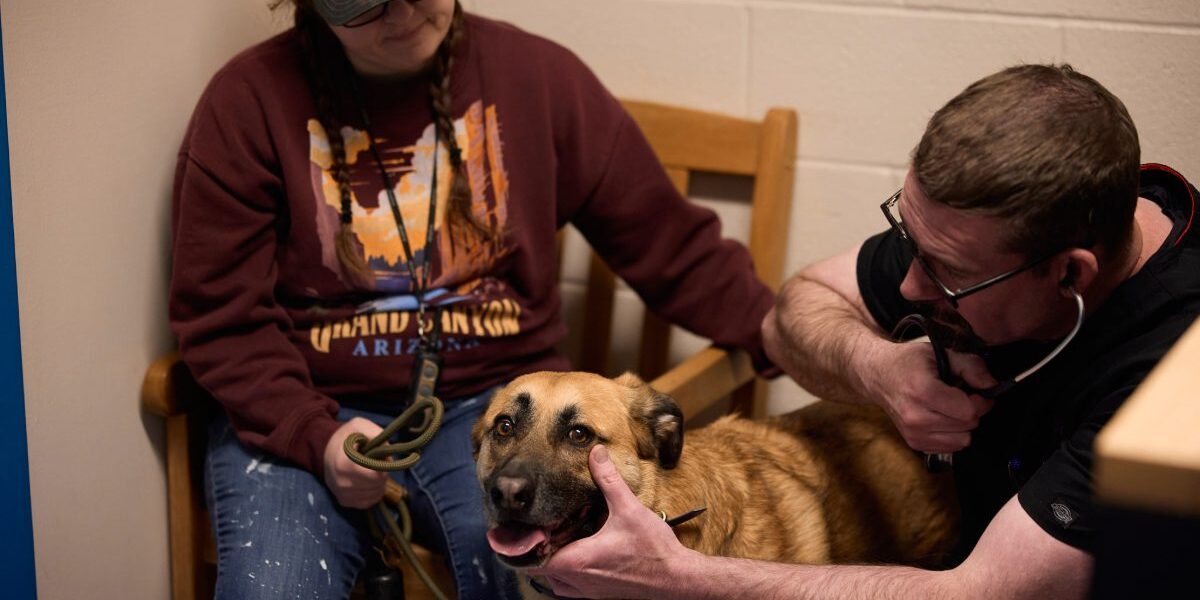
Every veterinarian knows an exam is more than numbers on a patient’s chart. It’s posture. Gait. Breath. Coat. Smell. Sound. The details that only appear when we are physically present.
For those of us who work with livestock or horses, the environment itself becomes part of the exam. The feed bunk. The water source. The ventilation. The footing. The herd. The management practices. These observations are medicine.
And so is the relationship with the person standing beside that animal.
There is irreplaceable value in looking a client in the eye, asking questions, listening, examining the patient, and understanding the world that animal lives in. Technology can extend that relationship. It should not replace it.
The VCPR is one of the foundations of our profession. Its principle is simple: before making medical decisions, a veterinarian must have sufficient knowledge of the patient. Traditionally, that comes from a timely physical exam or a visit to where the animal is kept.
That standard protects the patient, the client, and the veterinarian. Our work sits at the intersection of animal health, human health, food safety, and public health and it protects far more than the individual animal in front of us.
Once the relationship is established, telemedicine becomes a powerful tool for maintaining continuity of care. Not a substitute for veterinary medicine, but a way of practicing it responsibly.
The VCPR becomes especially important when medications are involved. We routinely make decisions that require judgment beyond the drug label. This is known as extra-label use. It includes compounded medications, Veterinary Feed Directives, and other regulated circumstances.
These decisions carry legal and professional responsibility. Prescribing without an appropriate VCPR risks regulatory action, licensing consequences, and liability.
But the larger issue is this: We must protect our ability to use the tools our patients need.
Veterinarians are entrusted with medications that save lives, relieve suffering, protect herds and flocks, and safeguard the food supply. That trust requires stewardship…. especially with antimicrobial resistance, controlled substances, and extra-label drug use.
When we demonstrate that prescribing decisions are grounded in genuine clinical knowledge we strengthen the case for maintaining the professional discretion our patients depend on.
That matters with regulators. It matters with legislators. And it matters with the public.
The in-person VCPR is not an obstacle to telemedicine. It is part of the firewall that protects our judgment.
We do not have to choose between technology and traditional practice. That is a false choice.
We can embrace telemedicine while preserving the physical exam. It is possible to use artificial intelligence while protecting clinical judgment. We can improve convenience while maintaining responsibility. We can expand access without lowering standards.
Veterinary medicine will change. The question is whether we will guide that change thoughtfully.
Technology should strengthen the VCPR and not erode it. Some things it does exceptionally well. Others still require us to show up, put our hands on the animal, see the environment, listen to the client, use our training, and take responsibility for the decisions that follow.
That isn’t old-fashioned veterinary medicine. It’s good veterinary medicine.
The in-person VCPR doesn’t hinder progress; it enables responsible progress. As we move forward, we should protect that foundation while embracing the remarkable opportunities technology provides.
Innovation matters. Access matters. Convenience matters.
But so do relationships, judgment, stewardship, and trust. And those are worth protecting.
Recent Posts
About Isaac Bott
Dr. Isaac Bott is a practicing veterinarian, practice owner, researcher, and veterinary leader whose career spans clinical medicine, theriogenology, business ownership, organized veterinary medicine, and national service. As a candidate for AVMA President-Elect, he brings a practical, service-minded perspective shaped by years of hands-on practice, scientific research, and leadership within the profession.