

There is something I have come to believe after years of practicing veterinary medicine, serving in leadership, and listening to veterinarians across this wonderful country.
Our profession does not have a passion problem. It has a connection problem.
Every day, extraordinary work is being done by people who rarely receive recognition for it.
In examination rooms, veterinarians are navigating difficult conversations with clients who love their animals but struggle to afford their care.
In rural communities, practitioners are answering emergency calls in the middle of the night, often after working an already exhausting day.
In veterinary hospitals across the country, practice owners are trying to balance rising expenses, employee compensation, client expectations, and the responsibility of providing exceptional patient care.
And somewhere in the middle of all these demands, I believe many of our colleagues are quietly asking a question:
Does anyone really understand what it feels like to practice veterinary medicine right now?
That question deserves an answer. And more importantly, it deserves our attention.
The Distance Between Leadership and Practice
I have tremendous respect for the American Veterinary Medical Association. I have had the privilege of serving this organization in several capacities, and I have witnessed firsthand the dedication, knowledge, and countless hours of service contributed by those who work on behalf of our profession.
The AVMA accomplishes important work every day. From legislative advocacy and professional standards to educational resources and the protection of veterinary medicine, its contributions are significant.
But I also recognize there is sometimes a disconnect between the work being accomplished at the organizational level and the experiences of veterinarians working in practice.
Between policy and its practical application. Between the decisions made in meeting rooms and the realities encountered in examination rooms. Between what an organization intends to accomplish and what its members actually experience.
I do not believe this disconnect exists because of indifference or a lack of commitment.
I believe it develops when the demands of leadership gradually create distance from the people an organization was established to serve.
And that distance matters.
Because an organization cannot effectively represent people it does not adequately understand.
Reconnecting the AVMA with practicing veterinarians is one of the four central pillars of my campaign for AVMA President-Elect.
It is a commitment rooted in my experiences as a veterinarian, practice owner, mentor, and volunteer leader.
And I believe it begins with something remarkably simple.
We must show up.
Leadership Begins with Listening
I have spent much of my professional life working alongside veterinarians from different backgrounds, practice types, and geographic regions.
One thing has become increasingly clear to me.
Although our professional experiences may differ, our desire to do meaningful work and provide exceptional care is remarkably similar.
The challenges facing a rural mixed-animal veterinarian in Utah are not identical to those confronting an emergency clinician in New York, an equine practitioner in Kentucky, or a small-animal practice owner in Florida.
Their needs are different. Their pressures are different. Their communities are different.
If we want to represent these individuals effectively, we must understand those differences.
And we cannot accomplish that exclusively through conferences, committee meetings, or formal presentations.
We need to visit the places where veterinary medicine actually happens.
Small independent clinics. Large specialty hospitals. Rural practices. Mobile veterinary operations. Food animal facilities. Emergency hospitals.
We need to sit across the table from our colleagues and ask meaningful questions.
What challenges are making your work more difficult?
What resources would help you succeed?
What are we doing well?
Where are we falling short?
And perhaps most importantly:
What do you wish the AVMA understood about your daily life?
Then we need to listen.
Not to defend what has already been done. Not to explain why something cannot change. And certainly not to arrive with every answer already prepared.
We need to listen because the experiences of practicing veterinarians should help determine the priorities of the organization that represents them.
The most effective leaders I have known have never been those who talked the most. They have been those who listened with the greatest intention.
Communication That Makes a Difference
Another important part of reconnecting our organization with its members involves improving how we communicate.
Veterinarians are busy people.
Many of us spend our days moving from one patient to another, answering telephone calls, managing employees, completing medical records, and trying to find enough hours to meet the needs of our families.
When we finally have an opportunity to read something from our professional association, it should provide information that is clear, relevant, and useful.
It should not feel like another obligation.
It should feel like support.
I believe we should continually evaluate how the AVMA communicates with practicing veterinarians.
Are we providing practical guidance on workforce shortages?
Are we helping practice owners understand how to better utilize and compensate their veterinary technicians?
Are we offering meaningful resources to improve financial sustainability?
Are we explaining legislative developments in ways that help veterinarians understand how those decisions may affect their practices?
And are we communicating our accomplishments in language that resonates with the people doing the work?
These are important questions.
I do not believe the solution is necessarily more communication.
I believe it is better communication.
Communication that demonstrates an understanding of the daily challenges of veterinary practice and provides practical resources to address them.
Every message should help answer a fundamental question:
How does this make life better for the veterinarians we serve?
Giving Practicing Veterinarians a Greater Voice
One of the things I love most about veterinary medicine is the remarkable diversity of people who make up our profession.
I have met veterinarians who have dedicated their entire careers to serving small agricultural communities.
I have worked alongside colleagues whose expertise and compassion have transformed the lives of countless animals and their owners.
I have watched young veterinarians bring fresh ideas, new perspectives, and tremendous enthusiasm into our hospitals.
And I have seen veterinary technicians and support staff demonstrate extraordinary knowledge, skill, and dedication.
There is an incredible wealth of experience within our profession.
We need to make better use of it.
The AVMA should continually seek opportunities for practicing veterinarians to contribute their perspectives, share their experiences, and help shape the direction of organized veterinary medicine.
We should create meaningful avenues for participation that do not require years of committee service or extensive travel.
We should make it easier for busy practitioners to share ideas and concerns.
And when those concerns are raised, we should demonstrate that they have been heard.
Because representation is about more than speaking on someone’s behalf.
It is about ensuring their experiences influence the decisions being made.
The strength of veterinary medicine has never rested exclusively in its institutions.
It rests in its people.
Our organizations are strongest when they recognize that truth.
Rebuilding Trust Through Consistency
Trust is an interesting thing.
It takes time to establish, requires effort to maintain, and can be weakened when people feel their concerns are repeatedly overlooked.
The relationship between the AVMA and practicing veterinarians is no different.
We cannot rebuild connection through a single initiative, a new slogan, or an occasional visit.
It requires consistency.
It requires showing up when there is no election approaching, no conference to attend, and no recognition to receive.
It requires being willing to hear criticism without becoming defensive.
It requires acknowledging that we do not have every answer.
And it requires following through on the commitments we make.
As a practice owner, I have learned that people do not judge leadership exclusively by what we say.
They judge it by what we do.
Our employees notice whether we listen to their concerns. Our clients recognize whether we follow through on our promises. Our colleagues remember whether we were present when they needed support.
The same principles apply to organized veterinary medicine.
We must be accessible, responsive, transparent, and accountable.
And we must demonstrate through our actions that the experiences of practicing veterinarians matter.
A Profession Worth Strengthening
I have been fortunate to spend my career in a profession that has given my life tremendous meaning and purpose.
Veterinary medicine has challenged me, humbled me, and introduced me to some of the finest people I have ever known.
It has also given me an appreciation for the sacrifices made by those who dedicate their lives to caring for animals and serving others.
I know what it feels like to finish a difficult day and wonder how tomorrow will be any easier.
I know the pressures of making payroll, managing employees, and trying to balance the financial realities of operating a practice with the needs of clients and patients.
And I know the satisfaction of doing something meaningful for an animal and the people who love it.
These experiences have shaped my perspective on leadership.
They have convinced me that the future of veterinary medicine cannot be determined solely by those sitting around conference tables.
It must also be shaped by the people standing in examination rooms, walking through barns, driving to emergency calls, and caring for patients every day.
I am an optimist.
I believe there is no end to the good we can accomplish and no limit to the positive influence we can have when we work together.
But that potential will only be realized when our professional organizations remain meaningfully connected to the people they represent.
I do not want an AVMA that simply speaks for practicing veterinarians. I want an AVMA that listens to them, learns from them, stands beside them, and works with them to build a stronger future.
That is what reconnecting the AVMA with practicing veterinarians means to me. Not simply better representation.
A stronger relationship. Not simply more communication.
A deeper understanding. Not simply an organization that works on behalf of its members.
An organization whose members genuinely feel that it works alongside them.
Because the future of this profession will not be secured by extraordinary leaders working alone.
It will be built by ordinary people choosing to do extraordinary things together.
One profession. One voice. One purpose.
Let’s lead together.
Recent Posts
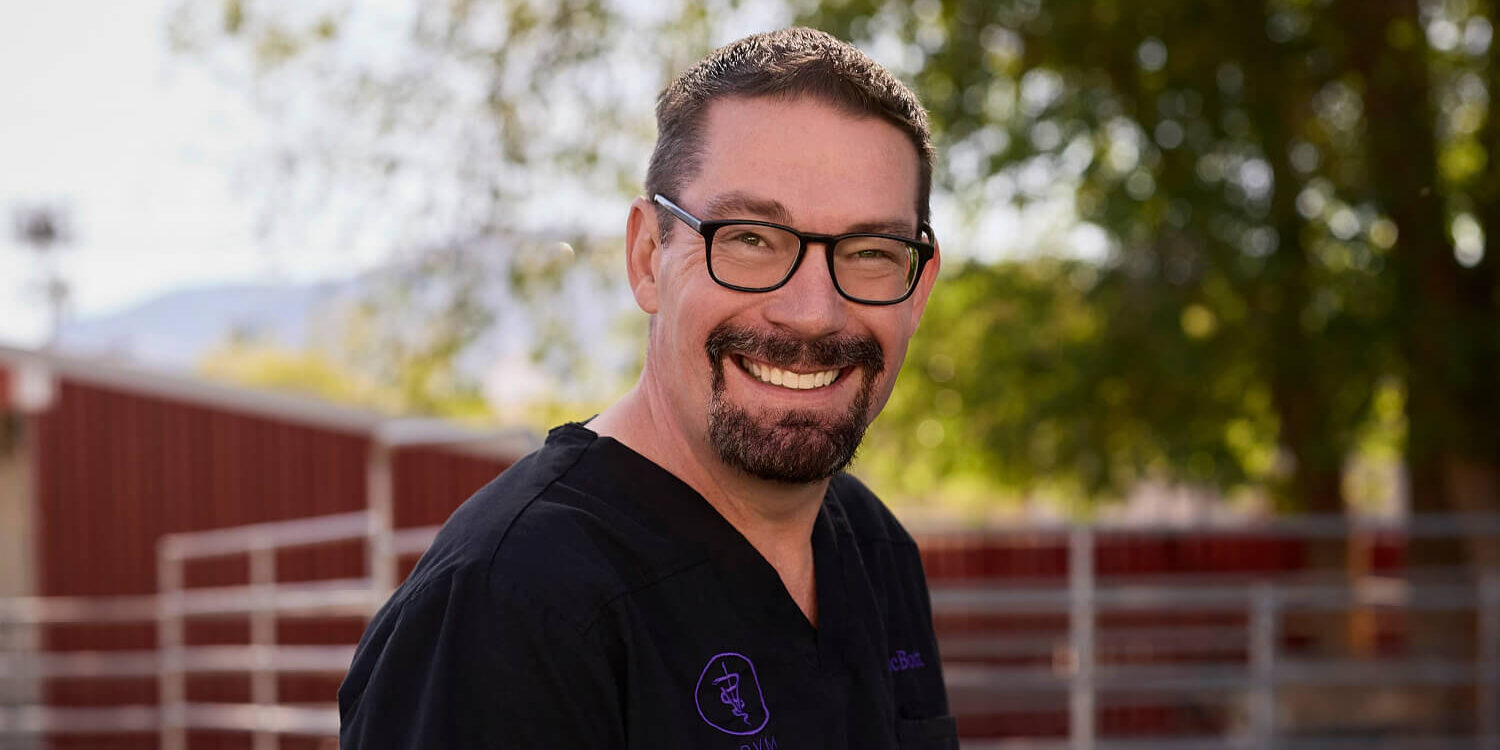
About Isaac Bott
Dr. Isaac Bott is a practicing veterinarian, practice owner, researcher, and veterinary leader whose career spans clinical medicine, theriogenology, business ownership, organized veterinary medicine, and national service. As a candidate for AVMA President-Elect, he brings a practical, service-minded perspective shaped by years of hands-on practice, scientific research, and leadership within the profession.