There is something remarkable about a profession that can take you from the examination room of a veterinary hospital to a windswept pasture, from the delivery of a newborn calf to the operating table of a beloved family pet.
Few professions offer such diversity. Fewer still provide so many opportunities to make a meaningful difference in the lives of animals and the people who care for them.
For me, veterinary medicine has never been simply a career. It has been a calling, a classroom, and an opportunity to serve.
And the experiences that have shaped my professional life have also shaped my vision for the future of our profession.
A Professional Home
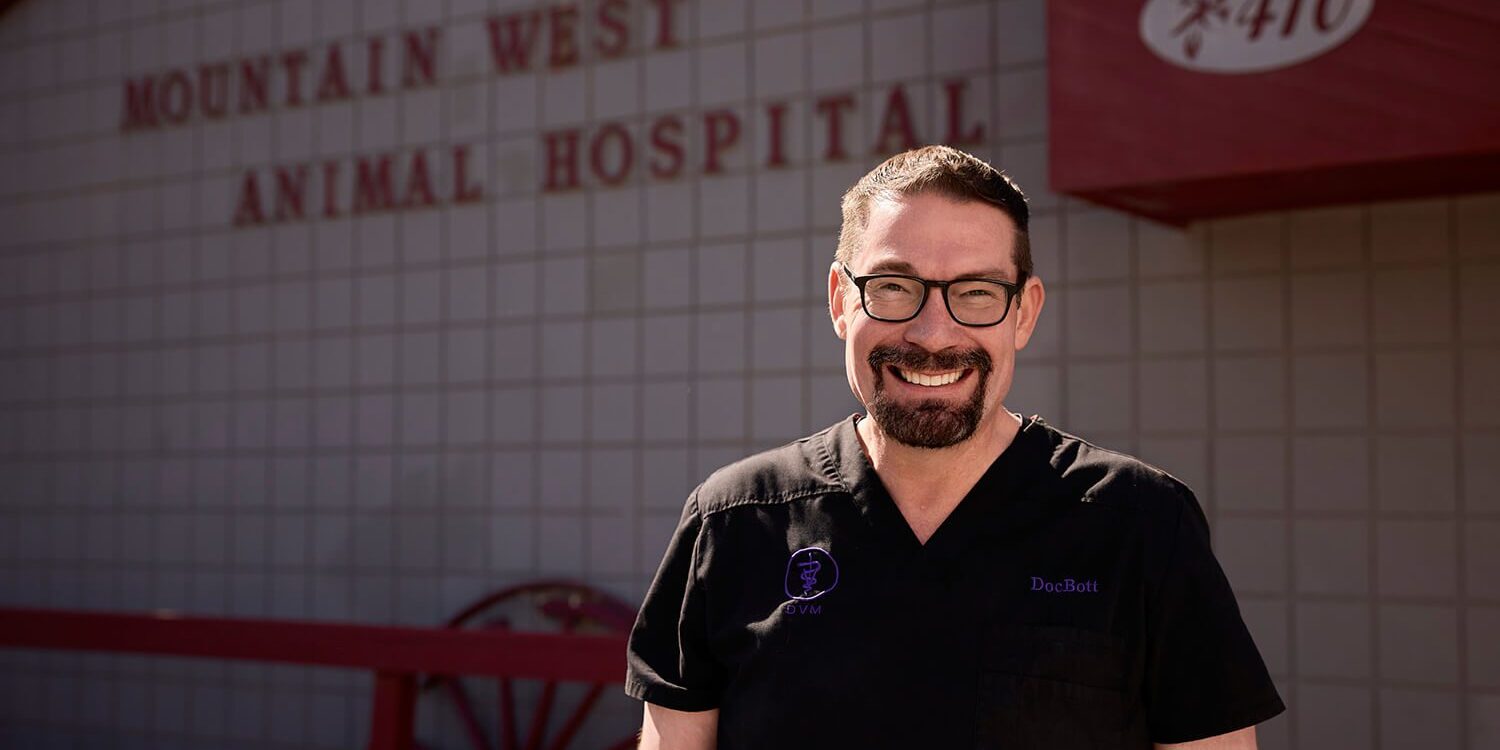
Mountain West Animal Hospital has been my professional home for many years.
Within its walls, I have experienced some of the greatest joys and most difficult moments of my career.
I have watched puppies grow old alongside the families who love them. I have shared the excitement of new beginnings and the heartbreak of final goodbyes. I have stood beside clients making difficult decisions, sometimes when there were no easy answers.
I have learned that the practice of veterinary medicine is about far more than diagnosing disease and prescribing treatment.
It is about relationships.
It is about the family bringing in a dog that has been part of their lives for fourteen years.
It is about the dairy farmer calling at two in the morning because a cow is down and the livelihood of his family may depend on what happens next.
It is about the trust placed in us when someone hands over an animal they love and asks us to do everything we can to help.
That trust is something I have never taken lightly.
In private practice, we learn that our knowledge and technical abilities matter tremendously. But so do our kindness, our honesty, and our willingness to listen.
We learn that excellence is not simply something we aspire to achieve. It is something our patients and clients deserve from us every day.
And we learn that doing the right thing is not always the easiest thing.
Sometimes it requires difficult conversations. Sometimes it means acknowledging our limitations. And sometimes it means staying long after the workday was supposed to end.
But those moments define who we are as professionals.
The Lessons of Practice Ownership
Owning a veterinary hospital has taught me lessons that no textbook could adequately explain.
It has required me to become more than a clinician.
I have had to learn to be a business owner, an employer, a mentor, a problem solver, and, perhaps most importantly, a leader.
I understand the pressures of meeting payroll, managing rising expenses, maintaining equipment, supporting employees, and providing exceptional patient care while remaining sensitive to the financial limitations of our clients.
I understand the difficulty of balancing the needs of a business with the needs of the people who depend upon it.
And I know that those responsibilities do not disappear when the last patient goes home.
There are days when the weight of those obligations can feel overwhelming.
But private practice has also taught me something extraordinarily valuable.
A veterinary hospital is only as strong as the people who make it work.
Veterinarians cannot succeed alone.
We depend upon veterinary technicians, assistants, receptionists, practice managers, and countless others whose contributions make our work possible.
Their knowledge matters. Their well-being matters. Their professional development matters.
And their ability to earn a sustainable living matters.
When we invest in the people who make up our veterinary teams, we strengthen the care we provide to our patients and the relationships we build with our clients.
These experiences have convinced me that protecting the future of veterinary medicine requires more than preserving our professional responsibilities.
It requires creating an environment where those who dedicate their lives to this work can build meaningful, sustainable careers.
Beyond the Clinic Door
Some of the most remarkable experiences of my career have occurred far from the examination rooms of Mountain West Animal Hospital.
They have taken place in pastures, barns, corrals, and remote locations where the challenges of veterinary medicine are often unpredictable.
My work with elk, deer, and particularly reindeer has introduced me to an extraordinary part of our profession.
Cervid medicine is a field that demands patience, creativity, and a willingness to approach familiar problems in unfamiliar ways.
It requires an understanding of animal behavior, physiology, reproduction, nutrition, and herd management.
And frequently, it requires us to acknowledge how much we still have to learn.
I have spent countless hours studying reproductive physiology, developing techniques, assisting with difficult births, and working alongside producers who have dedicated their lives to caring for these remarkable animals.
Some of those experiences have been enormously rewarding.
Others have been humbling.
Not every procedure succeeds. Not every animal survives. Not every question has an answer waiting in a textbook.
But each experience offers an opportunity to learn.
And those lessons have reinforced my belief that the future of veterinary medicine depends upon our willingness to innovate, collaborate, and continually expand our understanding.
One of the great privileges of this profession is that there is no single definition of what a veterinarian must become.
Some of us will spend our careers caring for dogs and cats.
Others will work with horses, cattle, sheep, goats, wildlife, exotic animals, or species most people will never encounter.
Some will become researchers, educators, public health professionals, industry leaders, or specialists in fields that barely existed a generation ago.
Each contributes something important.
Each brings a different perspective.
And each deserves a profession that recognizes the value of their work.
Protecting the Future Means Protecting Opportunity
As I have traveled across the country meeting with veterinarians, I have been reminded repeatedly of the extraordinary diversity of our profession.
The challenges confronting a rural mixed-animal practitioner are different from those facing an urban emergency clinician.
The needs of a food animal veterinarian may be different from those of a small-animal specialist.
And the opportunities available to a young veterinarian today may look very different from those that existed when I graduated from veterinary school.
Yet we share something fundamental. We all want to do meaningful work.
We want to provide excellent care, support our families, serve our communities, and feel that our professional contributions matter.
That common purpose is why Protecting the Future of Veterinary Medicine is one of the four central pillars of my campaign for AVMA President-Elect.
To me, protecting our future means ensuring that veterinary medicine remains a profession of opportunity.
It means defending the value of the veterinarian’s education, expertise, and professional judgment.
It means supporting practice models that allow veterinarians to serve their communities effectively while maintaining appropriate standards of care.
It means preserving opportunities for independent practice ownership while recognizing the diversity of employment and practice settings within our profession.
It means encouraging innovation and the responsible adoption of new technologies without compromising the veterinarian’s essential role in patient care.
And it means strengthening the opportunities available to veterinarians working in rural communities, food animal medicine, and other areas where access to veterinary services is increasingly challenging.
We must also recognize that the next generation of veterinarians will inherit the profession we choose to build today.
They deserve more than a career defined by financial pressure, professional exhaustion, and uncertainty.
They deserve mentorship, meaningful opportunities for advancement, a sustainable livelihood, and the freedom to pursue the areas of veterinary medicine that inspire them.
Our responsibility is not simply to preserve the profession we inherited. It is to leave behind a profession stronger than the one we entered.
Different Paths, One Profession
One of the greatest lessons I have learned from working in both private practice and cervid medicine is that our differences should never become divisions.
The veterinarian performing a complicated orthopedic surgery and the veterinarian assisting a difficult calving may use very different skills.
The researcher studying infectious disease and the practitioner managing a busy small-animal hospital may experience very different workdays.
But our commitment to animal health, human well-being, scientific knowledge, and professional service unites us.
There is tremendous strength in that shared identity.
We must resist the temptation to measure the importance of one area of veterinary medicine against another.
Our profession needs its general practitioners and specialists. It needs its researchers and educators. It needs its rural veterinarians and urban clinicians.
And it needs leaders who understand that no single practice type, geographic region, or professional interest represents the entirety of veterinary medicine.
I believe the AVMA has a responsibility to recognize, support, and advocate for the breadth of our profession.
Not because every veterinarian faces the same challenges.
But because every veterinarian deserves to know that their work matters and that their professional organization values their contribution.
What We Leave Behind
When I reflect upon my career, I do not find that my most meaningful memories are necessarily associated with professional recognition or accomplishments.
They are the moments when I knew that my work had made a difference.
A grateful client.
A difficult case that ended well.
A newborn animal taking its first breath.
A veterinary student discovering a passion for an area of medicine they had never previously considered.
An employee growing in confidence and capability.
Those are the experiences that have given my professional life meaning.
They have also shaped the kind of leader I aspire to become.
I do not believe leadership is about accumulating titles or recognition.
I believe it is about using our experiences, knowledge, and opportunities to make life better for others.
It is not enough just to be good. We must be good with purpose.
For me, that purpose is inseparable from the future of veterinary medicine.
I want the veterinarians who follow us to experience the same sense of wonder, satisfaction, and opportunity that drew so many of us into this profession.
I want them to have the freedom to explore new fields, develop new skills, and contribute in ways we cannot yet imagine.
I want them to know that they belong to a profession that values their knowledge, respects their contributions, and supports their well-being.
And I want them to inherit a profession that remains worthy of their dedication.
Mountain West Animal Hospital has taught me the value of relationships, trust, and service.
My work with cervids has taught me the importance of curiosity, innovation, and perseverance.
Together, these experiences have given me a profound appreciation for the breadth of veterinary medicine and the remarkable people who practice it.
They have also strengthened my conviction that our future is worth protecting.
I am optimistic about what lies ahead.
Not because our challenges are insignificant, but because I have seen firsthand the character, ingenuity, and compassion of the people who make up this profession.
And I believe that when we recognize the value of every veterinary discipline, support the people doing the work, and remain united in our shared purpose, there is no limit to what we can accomplish.
Whether our work takes us into an examination room, an operating suite, a research laboratory, or a pasture beneath the wide western sky, we are part of something much larger than ourselves.
We are stewards of a profession entrusted to us by those who came before.
And we have a responsibility to leave something of lasting value for those who will follow.
To care. To serve. To protect the future.
Let’s lead together.
Recent Posts
About Isaac Bott
Dr. Isaac Bott is a practicing veterinarian, practice owner, researcher, and veterinary leader whose career spans clinical medicine, theriogenology, business ownership, organized veterinary medicine, and national service. As a candidate for AVMA President-Elect, he brings a practical, service-minded perspective shaped by years of hands-on practice, scientific research, and leadership within the profession.